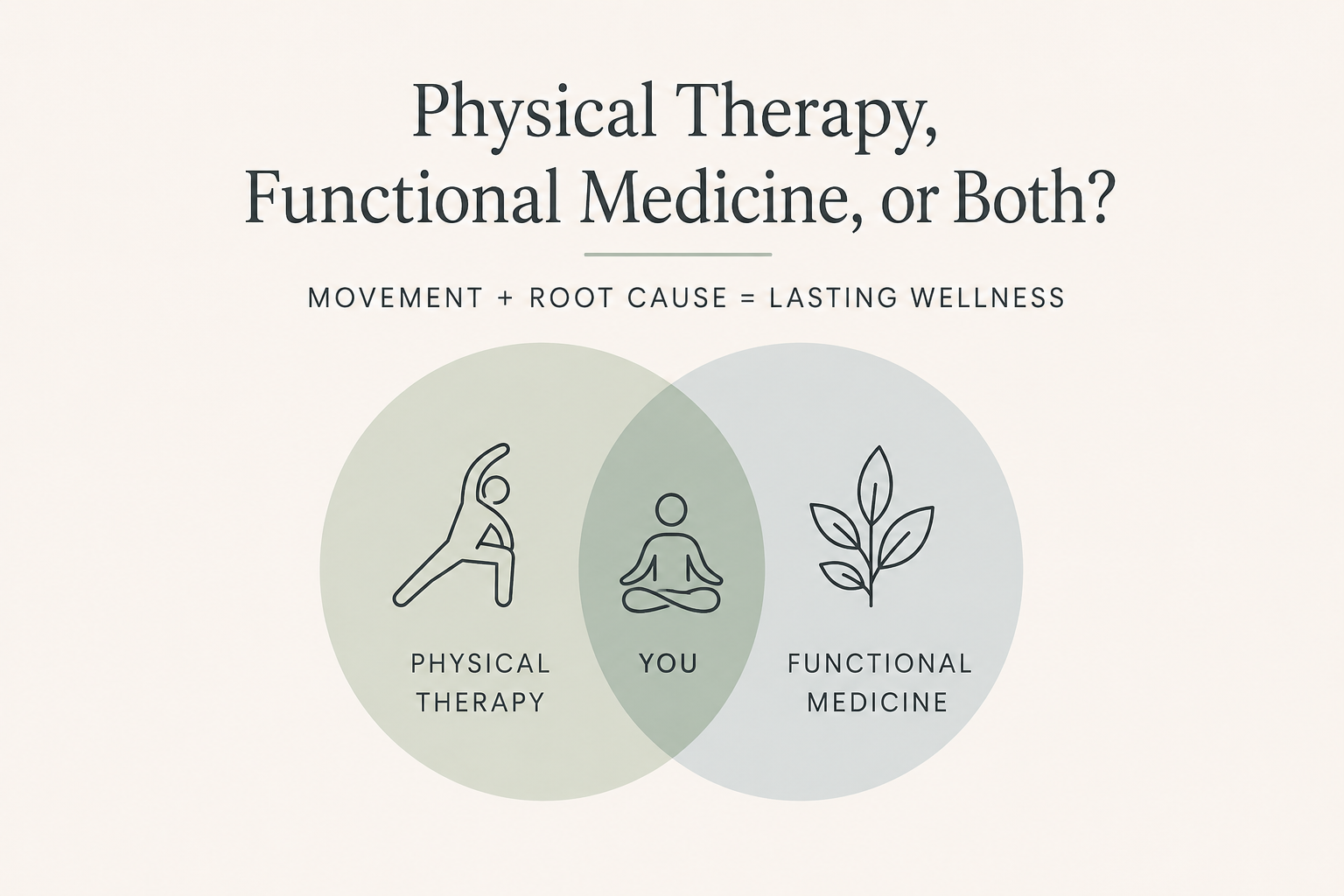
One of the most common questions people ask when they are struggling with pain, fatigue, dizziness, inflammation, or chronic symptoms is: “Where do I even start?” Should you see a physical therapist? A functional medicine practitioner? Or both?
The truth is that many health conditions do not fit neatly into one category. The body is interconnected. Muscles, joints, nerves, hormones, digestion, sleep, stress, metabolism, and the immune system constantly influence one another. That is why some people improve with exercise and hands-on therapy alone, while others continue to struggle until deeper physiologic factors are addressed.
Understanding the difference between physical therapy and functional medicine can help you determine what type of care is most appropriate for your situation.
What Physical Therapy Addresses
Physical therapy primarily focuses on movement, mechanics, and the nervous system. It is often the best fit when symptoms are related to pain, injury, mobility limitations, balance problems, muscle weakness, or movement dysfunction.
Physical therapy may help if you are experiencing:
Neck or back pain
Shoulder, hip, or knee pain
Sports injuries
Vertigo or dizziness
Headaches
Joint stiffness
Nerve pain
Post-surgical recovery
Balance problems
Chronic tension or movement limitations
A good physical therapist does far more than simply prescribe exercises. Treatment may include movement analysis, manual therapy, nervous system regulation, strength training, mobility work, vestibular rehabilitation, breathing mechanics, postural exercises, and recovery strategies.
In many cases, pain is not simply caused by “tight muscles” or “bad posture.” The nervous system, stress levels, sleep quality, inflammation, and overall recovery capacity also influence how the body feels and functions.
What Functional Medicine Addresses
Functional medicine focuses on internal physiology and identifying why symptoms may be occurring beneath the surface.
Instead of only asking, “What diagnosis fits these symptoms?” functional medicine asks, “Why is the body struggling in the first place?”
Functional medicine may be helpful if you are experiencing:
Fatigue or low energy
Hormonal imbalances
Poor sleep
Digestive symptoms
Bloating or constipation
Chronic inflammation
Brain fog
Autoimmune issues
Blood sugar instability
Difficulty recovering from stress
Persistent symptoms despite normal labs
This approach often includes advanced lab testing, nutrition assessment, lifestyle evaluation, gut health analysis, metabolic health support, and targeted supplementation.
The goal is not simply symptom management. The goal is improving the environment in which the body functions.
Why Many People Need Both
Here is the reality most patients eventually discover: movement problems affect physiology, and physiology affects movement.
For example:
A person with chronic neck tension and headaches may also have poor sleep, high stress hormones, blood sugar instability, and nervous system dysregulation.
Someone with persistent tendon pain may have underlying inflammation, poor recovery capacity, nutrient deficiencies, or metabolic dysfunction slowing healing.
A patient with dizziness may also have autonomic nervous system dysfunction, chronic stress overload, or inflammation contributing to symptoms.
A person with chronic low back pain may improve temporarily with exercise, but symptoms continue returning because poor sleep, high stress, systemic inflammation, or gut dysfunction are impairing recovery.
This is where combining physical therapy and functional medicine can become powerful.
Physical therapy helps improve movement, strength, nervous system regulation, and mechanical function.
Functional medicine helps improve recovery, energy production, inflammation, hormonal balance, sleep, and internal resilience.
Together, they address both the external and internal factors contributing to symptoms.
Signs You May Benefit From Both Approaches
You may benefit from combining physical therapy and functional medicine if:
Your pain keeps returning
You feel inflamed or exhausted
You are not recovering normally
Stress significantly worsens symptoms
You have both physical and systemic symptoms
Imaging is “normal” but you still feel unwell
Exercise alone is not solving the problem
You feel stuck despite trying multiple treatments
Many chronic conditions are not caused by a single issue. They are the result of multiple systems under stress simultaneously.
The Goal Is Long-Term Resilience
The best healthcare approach is not simply about reducing symptoms temporarily. It is about building a body that functions better long term.
That may mean improving joint mobility and strength while also improving sleep, reducing inflammation, improving gut health, stabilizing blood sugar, regulating the nervous system, and supporting recovery capacity.
You do not always need both physical therapy and functional medicine. But when symptoms are complex, chronic, or recurring, addressing both movement and physiology often leads to more complete and lasting results.
The body does not separate itself into isolated systems. Effective care should not either.