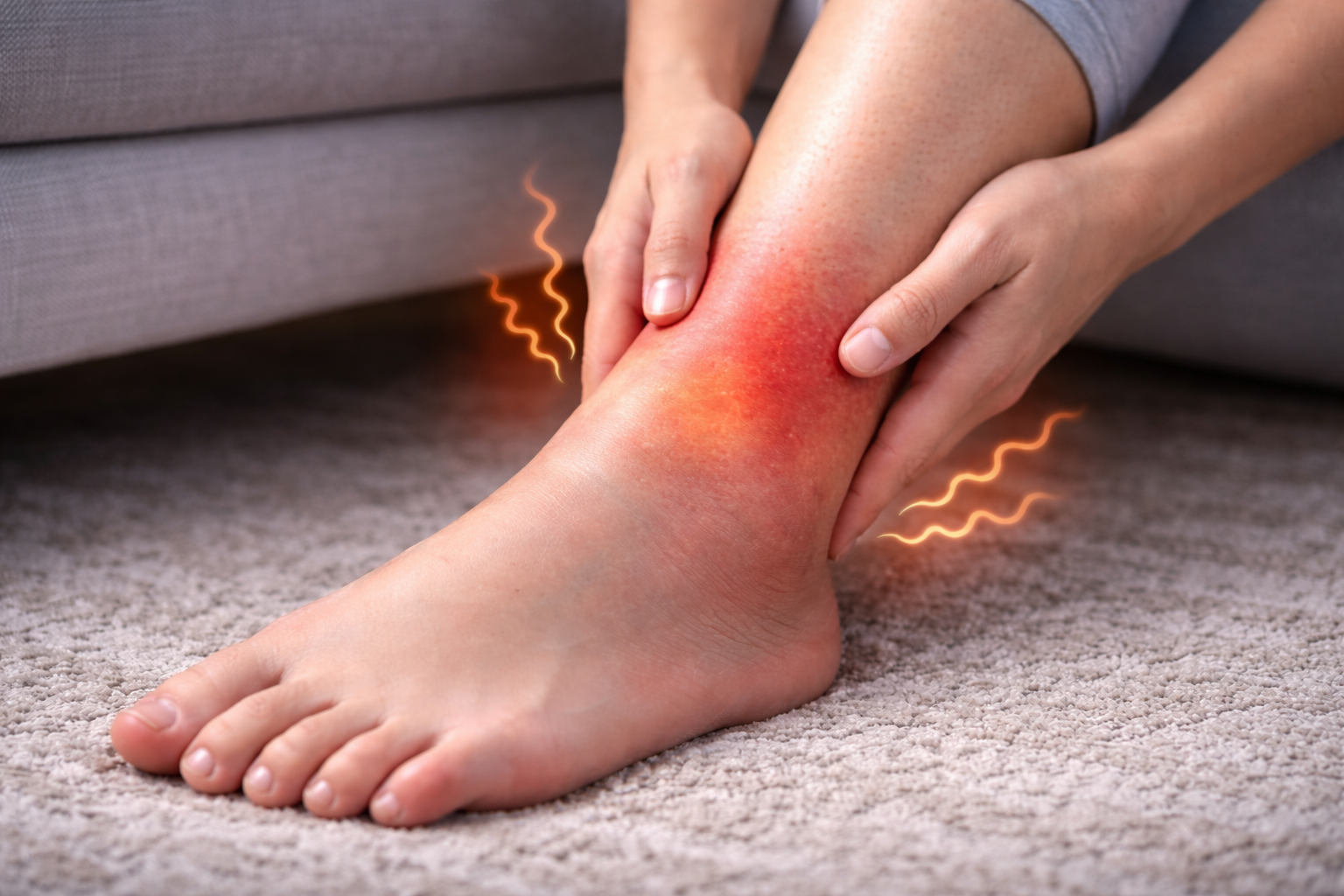
Inflammation is one of those words that gets thrown around a lot and ends up feeling vague. Inflammation is bad, right? But it’s also a stage of healing, so that must be good…right?
The truth is, inflammation isn’t simply good or bad. Context matters. To understand when it helps and when it becomes a problem, we need some clarity.
Inflammation vs. Swelling
First, we need to differentiate between inflammation and swelling, which are often lumped together but aren’t the same thing.
Inflammation is part of the body’s healing and defense response. It increases blood flow and brings immune cells and signaling molecules to an injured or threatened area so repair can begin. From that perspective, inflammation is not something you want to block outright.
If there were a car accident on the highway, you wouldn’t want to put up a roadblock before the ambulance arrives. That’s like blocking inflammation. Inflammation is the emergency response system, it delivers the tools needed for healing. However, there’s some wreckage that needs to be cleared. That’s swelling, the leftover metabolic waste. In other words, don’t block inflammation, but mitigate swelling. The best way to do that is through the lymphatic system which means pain free movement.
Inflammation becomes problematic based on how long it lasts and where it occurs. Here’s how I think about it:
When Inflammation Becomes a Problem: Timeframe and Location
Acute / Local Inflammation
This is an appropriate and necessary response to injury. Think of an ankle sprain. You want the inflammatory response to be localized and temporary so the tissue can heal.
Personally, I don’t routinely ice these injuries. The old-school approach was to aggressively block inflammation, which we now understand isn’t ideal. That said, ice doesn’t penetrate deeply enough to significantly shut down inflammation in most musculoskeletal injuries. Its primary effect is pain modulation via nerve desensitization, which is generally harmless.
So if ice makes you more comfortable, that’s fine but it’s not essential for healing.
Acute / Systemic Inflammation
This is typically a response to infection; bacterial or viral. Think food poisoning or a fever.
A fever exists for a reason. It creates an environment that helps slow down or eliminate pathogens. Blocking a fever without cause is similar to stopping the ambulance before it reaches the scene.
That said, intervention can be appropriate if a fever becomes excessively high or dangerous. The key is understanding why the response is happening before suppressing it.
Chronic / Local Inflammation
This is where things start to get more complicated.
A locally inflamed area that doesn’t resolve over time suggests that something is preventing proper healing. This could be repeated mechanical stress, Incomplete tissue recovery, poor load management, or altered nervous system signaling.
At this stage, inflammation isn’t necessarily the root problem, it’s a signal that something hasn’t normalized. This is where pain science, movement analysis, and physical therapy come into play.
Often, we can identify triggers, adjust loading strategies, and determine when it’s appropriate to progress exercises or return to sport.
Chronic / Systemic Inflammation
This is the most concerning category. Autoimmune diseases fall here.
In autoimmune conditions, the immune system becomes dysregulated and begins targeting the body’s own tissues. Conventional treatment often focuses on immune suppression, which can be necessary and lifesaving, but it doesn’t always address why the immune system became dysregulated in the first place.
Genetics play a role but they’re not the whole story. Environmental and lifestyle factors such as stress, sleep, infections, diet, and toxin exposure can influence whether autoimmune processes are activated. This is where the concept of epigenetics comes in: genes may load the gun, but the environment pulls the trigger.
Approaches like functional medicine aim to identify potential triggers and contributing factors. In some cases, addressing these factors can help reduce disease activity and support remission, though this should always complement, not replace, appropriate medical care.
Inflammation itself isn’t the enemy. It’s a tool, and like any tool, it can be helpful or harmful depending on how, where, and how long it’s used.
The goal isn’t to shut inflammation down indiscriminately, but to allow appropriate inflammatory responses, prevent them from becoming excessive or chronic, and address the underlying reasons they fail to resolve.