Ditch Your Cushion Shoes
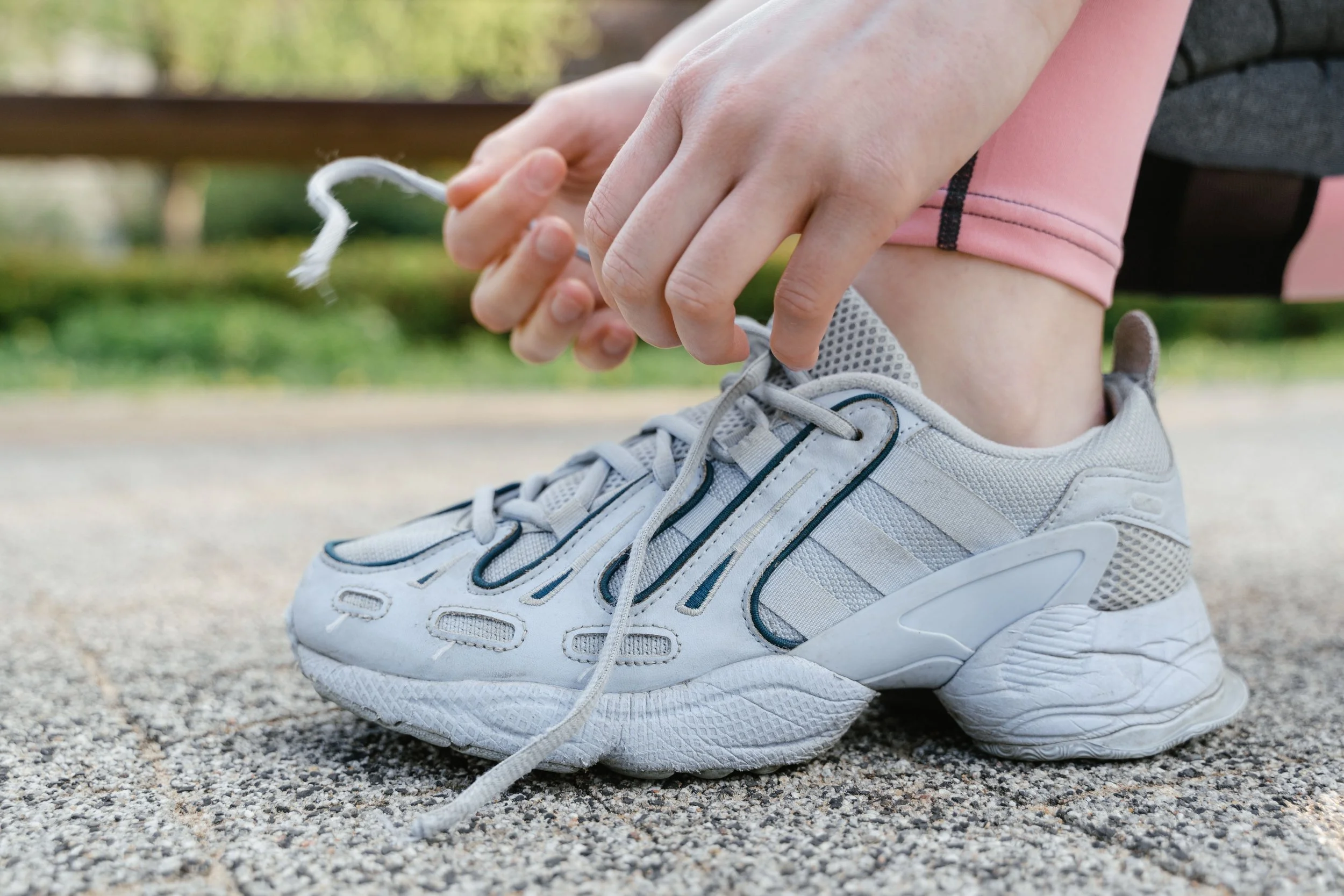
I don’t know why this is a controversial topic, but I’ve literally had social media posts removed when I bring up this topic. Our current “wear and tear” paradigm has never sat well with me. It just doesn’t make physiological sense. It’s one thing if you just like a cushion shoe. And I’ll contend that everyone is different, and what works for one person may not work for another. However, the belief that more cushion automatically protects your knees, hips, and ankles isn't supported by current biomechanics research. In fact, highly cushioned shoes may increase impact loading, alter natural running mechanics, and reduce the body's ability to adapt to stress.
Your Body Is Designed to Adapt
One of the most important principles in human physiology is Wolff's Law. Wolff's Law states that bone adapts to the demands placed upon it. When mechanical stress is applied, tissues such as tendons, ligaments, and bones become stronger and better able to tolerate future loads. When stress is removed, tissues become weaker over time. This is why astronauts come home from space with osteoporosis.
The human body thrives on appropriate stress. The goal shouldn't be eliminating force. The goal should be building a body capable of handling force.
The Cushioning Paradox
Running shoe companies have become very influential and have marketed thicker midsoles as a way to reduce impact. However, researchers have repeatedly observed what is often called the "cushioning paradox."
Several studies (see below) have found that runners wearing highly cushioned maximalist shoes actually experience greater impact loading than when wearing traditional shoes. Runners often subconsciously alter their mechanics when they perceive a softer landing surface, leading to a stiffer leg and higher loading rates.
A landmark study published in Scientific Reports found that highly cushioned shoes altered spring-like running mechanics and amplified rather than reduced impact loading.
Another study published in the American Journal of Sports Medicine found increased impact forces and loading rates in runners wearing maximalist shoes compared to traditional neutral shoes.
In other words:
More cushioning does not necessarily mean less force reaching your body.
Cushion Shoes Change Natural Running Mechanics
The human foot contains 26 bones, 33 joints, and thousands of sensory receptors. Your feet are not simply passive structures. They are active shock absorbers.
Highly cushioned shoes can reduce sensory feedback from the ground and encourage movement patterns that differ from natural foot function. Many runners unknowingly compensate for the softer surface by landing harder or farther in front of their center of mass.
The shoe absorbs some force, but the body often responds by creating more force.
Running Does Not Destroy Your Knees
One of the biggest myths in health and fitness is that running wears out your knees. The evidence tells a very different story. Runners are not more likely to develop knee osteoarthritis than non-runners and may actually have healthier knee joints.
MRI studies have confirmed that runners often have thicker and healthier cartilage compared to sedentary individuals. Researchers have found greater femoral cartilage thickness in athletes than in non-athletes, suggesting that regular loading stimulates positive adaptation.
Just like bone and muscle respond to lifting weights, cartilage responds to loading by becoming more resilient.
What About Barefoot and Minimalist Shoes?
This doesn't mean everyone should immediately throw away their shoes and start running barefoot.
A sudden transition from highly cushioned shoes to minimalist footwear can overload tissues that have become deconditioned. Calves, Achilles tendons, foot muscles, and plantar fascia require time to adapt. Making too much of a transition too fast can cause a lot of pain. I recommend progressing slowly into less of a heel drop, and a wider toe box.
The Bottom Line
I’ve said this before, we are not machines. We like to make comparisons of the body to a car; that the brake pads wear out over time. That's just not how the body works. We wear out from lack of stimulus.
Instead of asking:
"How can I protect my joints from force?"
Consider asking:
"How can I build joints that are capable of handling force?"
That mindset shift may be the difference between avoiding stress and becoming more resilient because of it.
References
Babayeva, A., et al. (2021). Mean femoral cartilage thickness is higher in athletes than sedentary individuals: A systematic review and meta-analysis. BMC Musculoskeletal Disorders, 21(1), 698. Retrieved fromhttps://pubmed.ncbi.nlm.nih.gov/32671433/
Chan, Z. Y. S., Au, I. P. H., Lau, F. O. Y., Ching, E. C. K., Zhang, J. H., & Cheung, R. T. H. (2018). Does maximalist footwear lower impact loading during level ground and downhill running? European Journal of Sport Science, 18(8), 1083–1092. Retrieved fromhttps://pubmed.ncbi.nlm.nih.gov/29792108/
Dhillon, M. S., Patel, A., Ramirez, J., et al. (2023). Effects of running on the development of knee osteoarthritis: An updated systematic review at shorter and longer follow-up times. Orthopaedic Journal of Sports Medicine, 11(2). Retrieved fromhttps://journals.sagepub.com/doi/10.1177/23259671231152900
Kulmala, J. P., Kosonen, J., Nurminen, J., & Avela, J. (2018). Running in highly cushioned shoes increases leg stiffness and amplifies impact loading. Scientific Reports, 8, 17496. Retrieved fromhttps://www.nature.com/articles/s41598-018-35980-6
Pollard, C. D., Ter Har, J. A., Hannigan, J. J., et al. (2018). Influence of maximal running shoes on biomechanics before and after a 5K run. Orthopaedic Journal of Sports Medicine, 6(6). Retrieved fromhttps://pmc.ncbi.nlm.nih.gov/articles/PMC5992812/
Zhang, X., Wang, Y., Liu, H., et al. (2024). Effects of long-term running on the structure and function of knee cartilage: A systematic review. Journal of Clinical Medicine, 13(15), 4376. Retrieved fromhttps://pmc.ncbi.nlm.nih.gov/articles/PMC11320545/
Lieberman, D. E., Venkadesan, M., Werbel, W. A., et al. (2010). Foot strike patterns and collision forces in habitually barefoot versus shod runners. Nature, 463(7280), 531–535.