Copper Overload (Wilson's Disease)
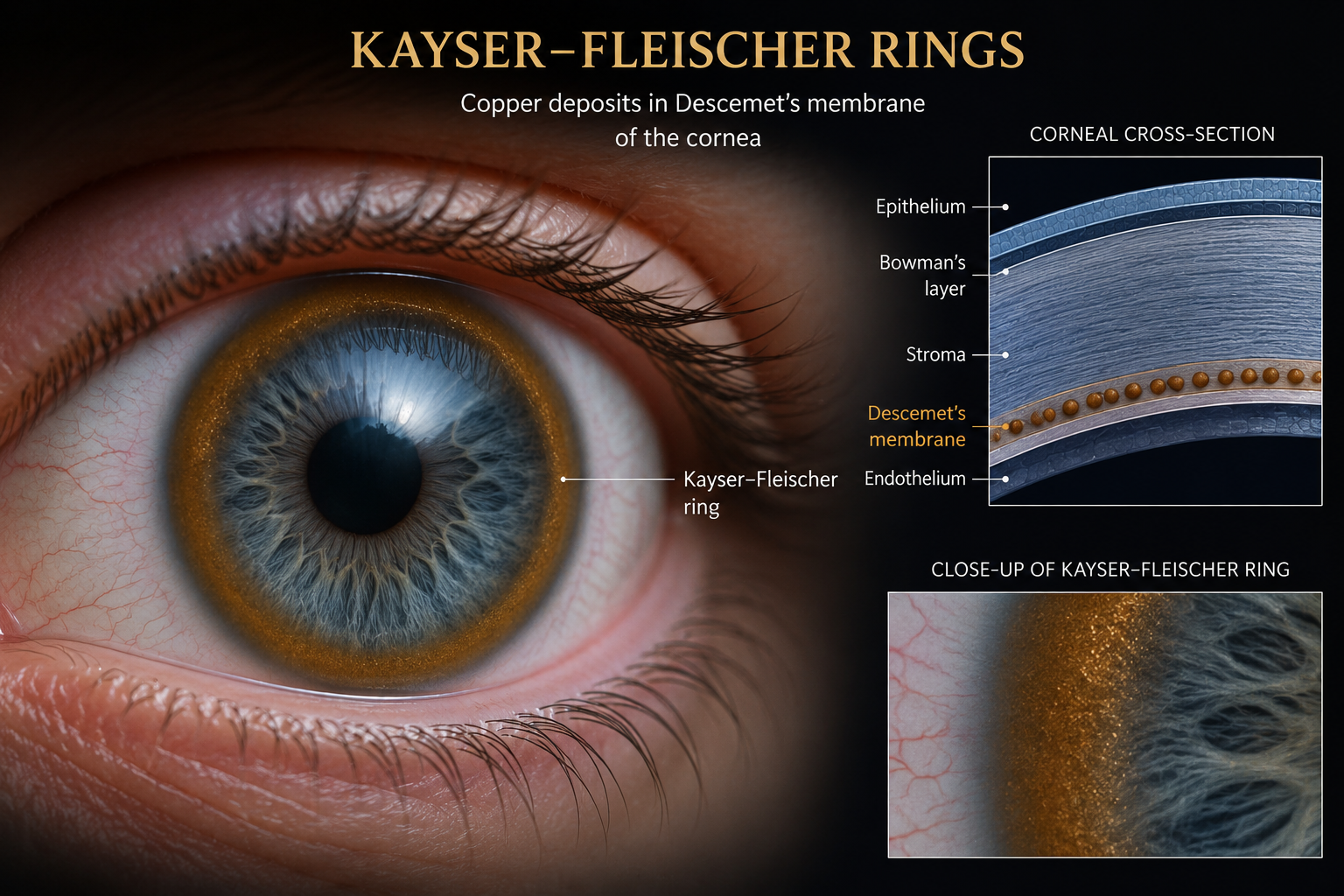
Most disorders of the body are either a state of too much, or too little. While not enough copper in the body can cause problems, too much copper can create a lot of nasty issues. It can cause liver problems, mental health issues, and neurologic symptoms. The telltale sign is what is known as a Kayser-Fleischer ring, which is what you see in the main picture for this blog.
Before we demonize copper, let’s talk about what it is needed for. Copper is an essential trace mineral involved in energy production, iron metabolism, connective tissue formation, nervous system function, and antioxidant defense.
Zinc and copper compete in the small intestine for absorption, so it’s helpful to look at the ratio in your bloodwork. It should be roughly 1:1, but optimal is considered 1.3 zinc to 1 copper. For example; zinc 120, copper 90 = 1.33.
Too much copper can happen for a few reasons, either there is increased copper intake, reduced copper excretion, or it is imbalanced with zinc (zinc deficiency). This blog will focus on reduced excretion, otherwise known as Wilson’s disease.
Wilson's disease is an inherited disorder that prevents the body from properly eliminating excess copper. Under normal circumstances, copper absorbed from food is processed by the liver and excreted through bile. With Wilson's disease, a mutation in the ATP7B gene impairs this process. Wilson's disease affects approximately 1 in 30,000 people worldwide and is inherited in an autosomal recessive pattern, meaning a person must inherit a defective gene from both parents.
Symptoms can mimic many other conditions, and because of this, Wilson's disease is often overlooked for years before a diagnosis is made. As a result, copper accumulates in tissues over time, eventually reaching toxic levels. The excess copper initially builds up in the liver and later spreads to the brain, eyes, kidneys, and other organs. Symptoms can vary significantly depending on where copper accumulates.
Liver Symptoms:
Elevated liver enzymes
Fatty liver
Hepatitis
Cirrhosis
Jaundice
Abdominal swelling
Easy bruising
In some cases, Wilson's disease may be mistaken for unexplained chronic liver disease.
Neurological Symptoms:
Tremors
Poor coordination
Difficulty walking
Slurred speech
Muscle stiffness
Abnormal movements
Balance problems
These symptoms often resemble other neurological disorders such as Parkinson's disease.
Mental Health Symptoms:
Anxiety
Depression
Irritability
Personality changes
Brain fog
Difficulty concentrating
Behavioral changes
For some, psychiatric symptoms may appear years before neurological symptoms.
One of the most recognizable signs of Wilson's disease is the presence of Kayser-Fleischer rings. These are copper deposits that form around the outer edge of the cornea, creating a golden-brown or greenish ring visible during an eye examination. Although not present in every case, Kayser-Fleischer rings are highly suggestive of Wilson's disease, particularly when neurological symptoms are present. Diagnosis often involves a combination of laboratory testing, imaging, and genetic evaluation.
Common tests include:
Ceruloplasmin
Ceruloplasmin is a protein that carries copper in the bloodstream. Many patients with Wilson's disease have low ceruloplasmin levels.
Serum Copper
Total serum copper may be low despite copper overload because much of the copper is not properly bound to ceruloplasmin.
24-Hour Urinary Copper
Elevated urinary copper excretion is one of the most useful diagnostic markers.
Liver Biopsy
A liver biopsy can directly measure copper accumulation within liver tissue.
Genetic Testing
Testing for ATP7B mutations can help confirm the diagnosis.
Brain Imaging
MRI may reveal characteristic changes in patients with neurological involvement.
Not everyone with elevated copper levels has Wilson's disease. Copper toxicity can also occur from:
Excessive supplementation
Contaminated water sources
Occupational exposure
Certain liver disorders
Wilson's disease is unique because the underlying problem is genetic impairment of copper elimination rather than excessive copper intake.
Treatment Options
The good news is that Wilson's disease is highly treatable when identified early.
Copper Chelation Therapy
Medications such as penicillamine or trientine bind copper and help remove it from the body.
Zinc Therapy
Zinc reduces copper absorption from the digestive tract and is often used for long-term maintenance.
Dietary Modifications
Patients are typically advised to limit high-copper foods, including:
Liver
Shellfish
Chocolate
Nuts
Mushrooms
Organ meats
I would also suggest requesting zinc and copper be ordered when doing bloodwork, as it is not routinely ordered. If you are interested in a comprehensive panel with an analysis, learn more below: