
Questions? Or do you want me to blog on a specific topic? Email me at: drchris@dpt.services
Want to get the latest blog posts? Sign up for the Thursday Three Newsletter below.

How a Stiff Ankle Can Lead to a Stiff Hip
Ankles get stiff, particularly in dorsiflexion. This can have all kinds of consequences, but one that isn’t talked about is the relationship between ankle and hip.
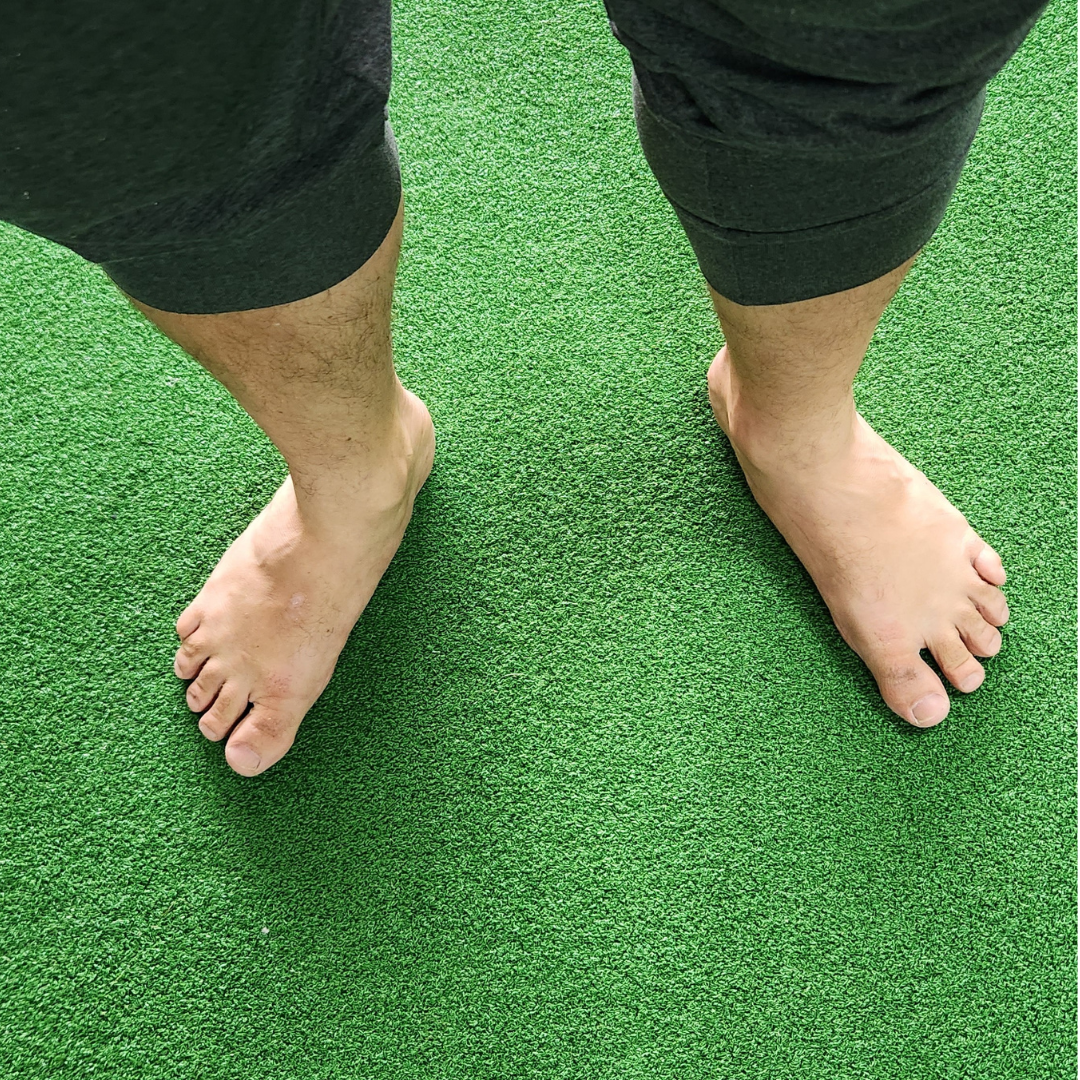
Ankles get stiff, particularly in dorsiflexion. This can have all kinds of consequences, but one that isn’t talked about is the relationship between ankle and hip.
When your ankle is stiff and missing dorsiflexion, the feet turn out, like pictured about. That’s because to walk, you need about 10 degrees of dorsiflexion. If you don’t have that, as you run out of range of motion with the trail leg, the foot will turn out to get away from the stretch felt in the calf. The body will innately do what’s easiest, that’s just how we’re wired.
Over time, and thousands of steps, the hips will adapt to the position you put them in. With the foot turned out, the femur is externally rotated. The muscles that control this motion in the hip, will adaptively stiffen in that position. Whatever a muscle does, it limits the opposite motion. For example, the hamstrings bend the knee, and limit knee extension. For this example, the external rotators will limit hip internal rotation. Limited hip internal rotation is one of the most common dysfunctions I see in most of my patients. This can become a problem for rotational sports such as hockey, golf, tennis, etc.
When the body is missing a particular range of motion, it will find what it needs at the neighboring joint. In this instance, the spine. So if you have back pain from your sport, and you find you are missing hip internal rotation, check your ankles. They may be the root of the problem.
So what do you do about it? Get range of motion back in both the ankle and hip. For the hip, I like to do this:
For the ankle, stretch the muscle like so:
And mobilize the joint like this:
5 Ways Breathing Influences Low Back Pain
Breathing seems like such a simple thing, and it is in a sense. However, when you think about how many breaths we take a day, altering your breathing can have a huge impact. When I have a patient with low back pain, I’ll always look at their breathing pattern. 9 times out of 10, I find that they are chest breathing. This is not necessarily a ‘wrong pattern’, but it gives me some insight into how their full system is operating. To explore this, I’ll explain 5 ways breathing can have a role in reducing low back pain.
Breathing seems like such a simple thing, and it is in a sense. However, when you think about how many breaths we take a day, altering your breathing can have a huge impact. When I have a patient with low back pain, I’ll always look at their breathing pattern. 9 times out of 10, I find that they are chest breathing. This is not necessarily a ‘wrong pattern’, but it gives me some insight into how their full system is operating. To explore this, I’ll explain 5 ways breathing can have a role in reducing low back pain.
The first way it can help is through movement. When someone is in pain, it’s almost instinctual to stop moving. The nervous system goes into a sort of panic mode and movement becomes sensitized. When you are laying on your back and just breathing, you are getting a gentle flexion and extension with each breath you take. Taking some time to do some intentional breathing will help the nervous system calm down as the spine is moving in a non-threatening way.
Secondly, there is usually swelling associated with low back pain. Generally it is in the joint spaces between the vertebrae. Being still allows it to fester. The lymphatic system is responsible for mitigating swelling. It just so happens that there is a major collection tubule of the lymphatic system, called the cisterna chyli, that sits right under your diaphragm. So belly breathing (diaphragmatic breathing) works like a pump, every breath squeezes that tubule and moves swelling out of the system.
I mentioned belly breathing. That is usually what I’ll recommend. That doesn’t mean the chest does move, it just means that the breath is initiated by the diaphragm rather than the chest. This has an effect on the nervous system. Chest first breathing is associated with the sympathetic system, whereas belly first breathing is associated with the parasympathetic system. When we are in a sympathetic state, muscle tone increases in preparation for a fight or flight response. Conversely, when we are in a parasympathetic state, the muscles are able to relax. Yet another win for breathing and low back pain.
Speaking of muscles, there is a muscle that almost always gets irritated in low back pain; the QL (Quadratus Lumborum). This is a muscle that aligns the sides of your lumbar spine, and attaches to the pelvis, and the 12th rib. Because of this attachment to the rib, it has a role in creating a stable support for the diaphragm to move. If the diaphragm is not moving because of chest first breathing, the QL can stiffen and get irritated.
One final way that breathing can help is through tissue pH. It’s been known for a while that tissue acidosis, (low pH) can cause trigger points and deep muscle pain. You can quickly alter your blood pH through breathing. As 02 rises you become more alkaline, as CO2 rises, you become more acidic. To leverage this, all you have to do is exhale longer than you inhale. I recommend aiming for 6 breaths per minute so each cycle is 10 seconds. So if you inhale for 4 and exhale for 6, you’re covered. In just a few minutes, you become slightly more alkalinic. You may get lightheaded, that’s from being in a mild phase of respiratory alkalosis.

Tingling in the Arm - Thoracic Outlet Syndrome
If you have numbness or tingling, or radiating pain in the arm, chances are there is a nerve that is either being compressed or is irritated. This can happen in numerous places such as the cervical spine, a muscle in the forearm, or it can be thoracic outlet syndrome.

If you have numbness or tingling, or radiating pain in the arm, chances are there is a nerve that is either being compressed or is irritated. This can happen in numerous places such as the cervical spine, a muscle in the forearm, or it can be thoracic outlet syndrome.
The thoracic outlet is a triangle from your jaw, to your clavicle, to your shoulder. The brachial plexus, a network of nerves, exit the spine in this triangle and feed all of the muscles of your arm. If you get compression in this triangle, you have thoracic outlet syndrome.
There are 3 main areas that can compress the nerves; the scalenes, the pec, or from the first rib. Here is how I test for it:
If it’s from the scalenes, the most common reason is from weakness in the front of the neck. For that, I’d stretch the scalenes and strengthen the front of the neck:
If it’s coming from the pec, I’d do a pec release like this:
The rib can be trickier and you’d definitely want to see a physical therapist for this. Either way, you should have it properly assessed, and this is just meant to be a quick overview.
Oftentimes, I see someone with these symptoms and they have had an image of their neck. Of course, something was found on the image, a disc bulge, stenosis, degeneration, etc. This does not always mean it’s an issue. Most asymptomatic people will have these findings also. The clinical presentation matters more than the image. So don’t rush to surgery, because it may not solve the issue. See a physical therapist first. The good news is that it can often be solved in 4-6 visits.

4 Exercises for the Tibialis Posterior
The Tibialis Posterior is a muscle that lines the inside (medial) part of the lower leg along the shin. Its insertion is on 2 bones; the navicular and the medial cuneiform. It’s an important stabilizer of the arch and it plantarflexes and inverts the ankle. It commonly gets weak and can cause irritation. I also find that ‘plantar fasciitis’ is often diagnosed, but it’s the tibialis posterior that is really the problem.

The Tibialis Posterior is a muscle that lines the inside (medial) part of the lower leg along the shin. Its insertion is on 2 bones; the navicular and the medial cuneiform. It’s an important stabilizer of the arch and it plantarflexes and inverts the ankle. It commonly gets weak and can cause irritation. I also find that ‘plantar fasciitis’ is often diagnosed, but it’s the tibialis posterior that is really the problem.
If you are stiff in the ankle and you are missing dorsiflexion, typically the foot will evert when walking and can cause the foot to whip back to the midline. This is one movement that can irritate this muscle. Also, dancers that are on point a lot can develop tendonitis of this muscle.
Here is a simple way you can test it for yourself:
Here is a way to calm down the muscle:
Here is a seated exercise to begin to strengthen it:
When it has calmed down, you can progress to a standing exercise:
Then you can add some movement in standing:
And then add some rotation:

Low Back Pain? Maybe it’s Your Lats?
I’ve seen this countless times; a client walks into my office, terrified of their recent MRI. They’ve got several disc bulges and couldn’t move for a few days after lifting something heavy. Surgery has been suggested. However, the whole time, it’s just muscle.

I’ve seen this countless times; a client walks into my office, terrified of their recent MRI. They’ve got several disc bulges and couldn’t move for a few days after lifting something heavy. Surgery has been suggested. However, the whole time, it’s just muscle.
Unless a muscle is torn, nothing abnormal really appears on imaging. You can’t see a stiff muscle. “But Doc, I couldn’t walk, it must be the disc”. An irritated muscle can most certainly can immobilize you.
The lats are big powerful muscles that range from the shoulder to the low back. They extend and internally rotate the shoulders. They limit the opposite, shoulder flexion and external rotation.
Here are a couple quick assessments and exercises to use:
Now, these are some general ways to get range of motion back, however if you want to get more specific to the lat, I like to use this:
And if you want to get more aggressive you can use this:
Remember, it’s important to get a proper assessment when having any kind of pain. Even if an image shows that something is “wrong”, it has to be correlated to how you move.

Lifestyle and Chronic Pain
I was going to call this article “Stress and Chronic Pain” but I don’t think the word stress fully encapsulates what this is about. Stressors can absolutely trigger chronic pain, but not just perceived stress. Some of the lifestyle decisions we make can lead to something called HPA axis dysfunction, which dysregulates cortisol. From there, many systems of the body are impacted and we stay in a chronic state of pain. Have you ever noticed that pain increases following a poor night's sleep? This article will explain the mechanism.

I was going to call this article “Stress and Chronic Pain” but I don’t think the word stress fully encapsulates what this is about. Stressors can absolutely trigger chronic pain, but not just perceived stress. Some of the lifestyle decisions we make can lead to something called HPA axis dysfunction, which dysregulates cortisol. From there, many systems of the body are impacted and we stay in a chronic state of pain. Have you ever noticed that pain increases following a poor night's sleep? This article will explain the mechanism.
Let’s work backwards on this. I think we all know that swelling can cause pain. It is common to use cortisone cream or get a cortisone injection to manage pain. Cortisone is basically the synthetic version of cortisol, the stress hormone. Cortisol is a strong anti-inflammatory. There is a good reason for this. When the sympathetic nervous system is activated, cortisol is released. There are systems of the body we need to prioritize when in this fight or flight mode. We need energy, so cortisol liberates glucose into the blood to be used for energy. That’s why it is sometimes called glucocorticoids. There are systems that get down regulated because they aren’t high priority when in a fight, such as the immune system. So cortisol inhibits the inflammatory response which is handled by the immune system.
Most of us are in a chronic sympathetic state. Want a quick assessment of what state you are in? Take a deep breath in. What rises first? Your chest or your belly? Chest first breathing is correlated to the sympathetic state. (Hint: you can trigger the parasympathetic by switching to belly first breathing).
Earlier I mentioned something called HPA axis dysfunction. This is a huge topic and I won’t cover the nitty gritty in this article, I’ll just give an overview. The HPA axis stands for hypothalamus-pituitary-adrenal axis. This is the hormonal response system for stress. It starts in the brain, and tells the adrenal glands to secrete cortisol.Under normal circumstances, there is a diurnal pattern to cortisol secretion. It peaks in the morning with exposure to light, then declines, with a second small rise in the afternoon. It then descends as the sun goes down. When you are chronically spiking it, this pattern can become dysregulated. If you drink four cups of coffee a day, it stops having the same effect on you. It’s similar to this; it basically flatlines and you can have low cortisol levels all day. That means that you are missing out on the anti-inflammatory effect of cortisol. So that swelling in your knee will never go down.
So HPA axis dysfunction is definitely something you want to avoid. If you develop this dysfunction, you can’t supplement or exercise your way out of it. You have to eliminate the stressors. There are 4 categories of HPA axis stressors: perceived stress, circadian disruption, glycemic dysregulation, and inflammatory signals.
Perceived stress is what you think it is. Mental/emotional/financial stress. You have to identify the stress and eliminate it or find a way to mitigate it. Some tips include learning how to say no, avoiding negative people, going on a ‘news fast’, and stopping useless internet debates. Seeking parasympathetic activities such as walking in nature, massage, meditation, and breathwork can all be good ways to mitigate stress.
Circadian disruption generally occurs because of two reasons; either not enough exposure to natural light, or too much exposure to blue light from electronics. Keeping your cell phone out of your bedroom should be a priority in the evening. If you want to watch tv at night, getting blue light blocking sunglasses may help. Getting 15-30 minutes of natural light, without sunglasses is important. Particularly in the morning. Going for a morning walk would take care of this.
Blood sugar dysregulation is a massive problem in the United States, and is mostly related to diet. The expression, ‘what gets measured, gets managed’ applies here. Probably the best thing to do is get a continuous glucose monitor, even for just a month. This will give you real time data on how foods spike your glucose. For example, I learned that jasmine rice spikes my blood sugar, but basmati does not. You’ll also learn what activities may help reduce it. Most will find that exercise and ice baths reduce blood sugar. For more on this, read here.
Inflammation is a bit of a two way street. It triggers HPA axis dysfunction, and HPA axis dysfunction allows inflammation to fester. So it’s a bit of a death spiral. There are a lot of triggers for inflammation so you have to identify the source and eliminate that. Some triggers that are often overlooked include food sensitivities and exposure to molds or toxins.
The bottom line is that pain is complicated. You have to dial in the diet and lifestyle factors before you can eliminate pain for good.

Pain Behind the Knee - Popliteus
There are many reasons for pain behind the knee. Your hamstring and gastroc both cross over the knee, so one of these muscles could be irritated. You could have a Baker’s cyst (benign), or have a lymphatic backup. One other possibility is an irritation of the popliteus.
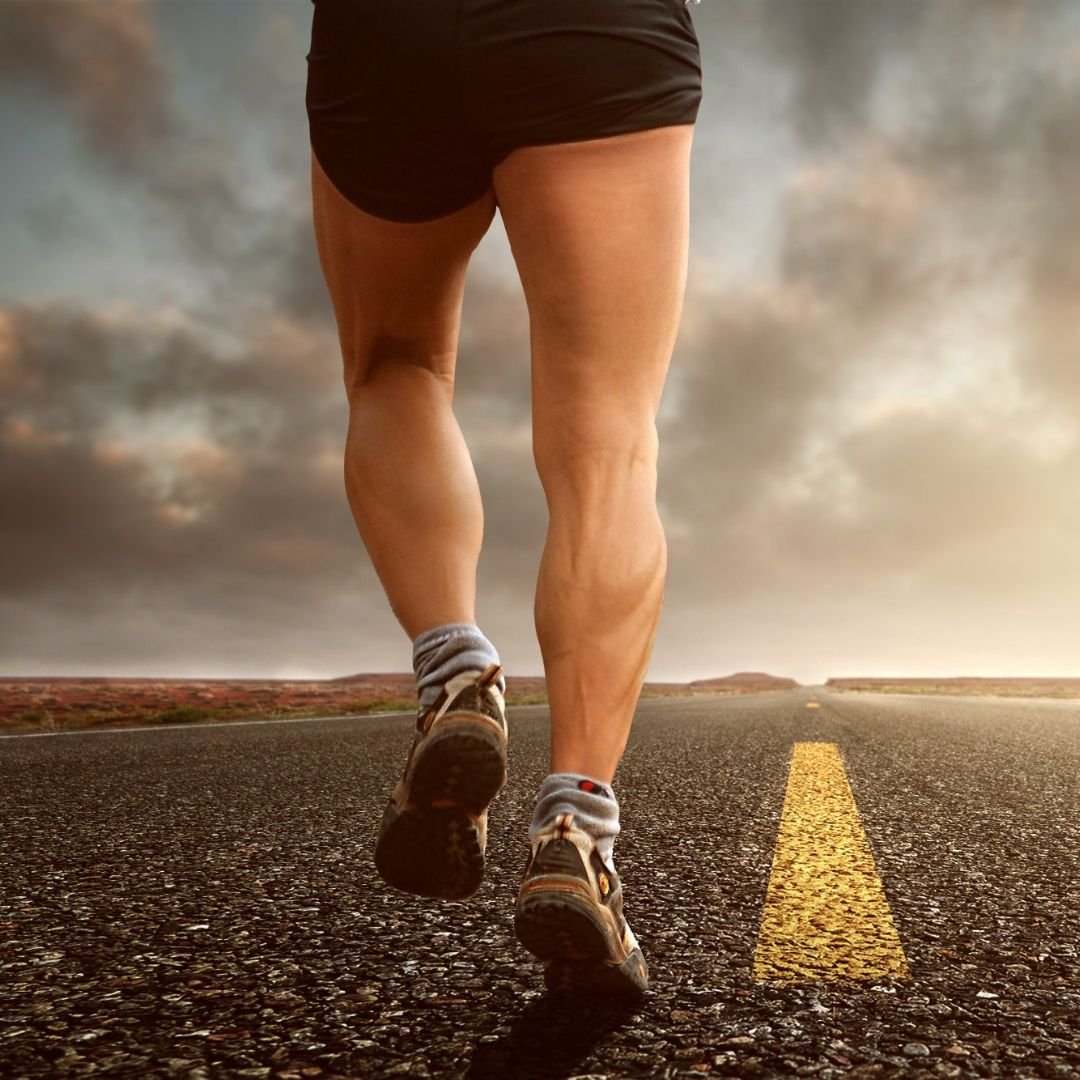
There are many reasons for pain behind the knee. Your hamstring and gastroc both cross over the knee, so one of these muscles could be irritated. You could have a Baker’s cyst (benign), or have a lymphatic backup. One other possibility is an irritation of the popliteus.
The popliteus is a small muscle with a big role. It’s a knee stabilizer, but it also can create rotation in both directions depending on the position of the leg. When the leg is planted on the ground (closed chain), it externally rotates the femur. When the leg is off the ground (open chain), it rotates the tibia internally. If you’ve heard of the screw home mechanism of the knee, it’s basically the opposite. The screw home mechanism is like a lock when the knee moves into extension (straightening). The popliteus basically unlocks it from this position and allows flexion (bending).
It has a few other functions. It is intracapsular and attaches to the lateral meniscus. It posteriorly retracts the meniscus so it doesn’t get pinched in the joint. It also prevents knee hyperextension. Because of this role, it can be provoked with excessive sprinting or downhill running.
Here is a test for the popliteus:
Here is an exercise that may help the popliteus:

Breathing and Stress
Breathwork has been a popular topic lately, and for good reason. It has a big return on investment. There are surprisingly many ways to breathe, and for something we do so often, a subtle change can have a huge impact. This article will focus solely on how breathing and stress are related.
Breathing and Stress
Breathwork has been a popular topic lately, and for good reason. It has a big return on investment. There are surprisingly many ways to breathe, and for something we do so often, a subtle change can have a huge impact. This article will focus solely on how breathing and stress are related.
This really boils down to the autonomic nervous system. We have two divisions, sympathetic (fight or flight) and parasympathetic (relax and digest). Our nervous system can go back and forth between these systems and it’s not like a switch, but rather a spectrum. In other words, reading an email from your boss may be mildly sympathetic while getting into a bar fight is highly sympathetic.
When in a fight, or running from a bear, you need energy, and quickly. Our bodies can burn fats or carbs (glucose) for fuel. Carbs are more readily available so the body would rather use carbs in an emergency situation. Cortisol is the hormone involved in the stress response. Its job is to liberate glucose from the muscles and liver into the bloodstream. This is a good thing for an emergency, however long term chronic secretion can lead to issues. For example, if you are chronically stressed, you will have high levels of glucose in the blood which can lead to diabetes. This is the link between stress and weight gain.
Our body is always trying to maintain homeostasis, or balance. For example, breathing through the right nostril is tied to the sympathetic nervous system, whereas breathing through the left nostril is parasympathetic. Breathing through both maintains balance.
A similar thing happens with breathing. We can breathe diaphragmatically (belly breathing) or with our chest. Chest breathing is more associated with sympathetic activity, whereas belly breathing is more parasympathetic. Just picture someone in a fight, their chest is usually heaving unless they are acclimated to fighting like an MMA fighter, and are relaxed.
It is quite common to develop a chest dominant breathing pattern. This is likely a product of our environment. The constant hustle and bustle, financial stress, relationship stress, watching the news, can all trigger the sympathetic nervous system. This is a trainwreck for long term health. Chronically elevated blood sugar and high blood pressure. Not good.
You can easily test this on yourself. Lay on your back and breathe. What rises first? Chest or belly? If it’s your chest, you can be sure that you are in a more sympathetic state. You can use this as an exercise; focus on belly rising first. This is a great way to wind down the day, especially if you have difficulty falling asleep. This will quickly put you into a parasympathetic state.
Additionally, the sympathetic state increases muscle tone which makes sense if you are about to get into a fight. However, if you are dealing with muscle pain, it could be from increased muscle tone. So if you are trying to reduce pain, seeking the parasympathetic state will help the muscles relax. This, in part, is why massage can help. It engages the parasympathetic nervous system.
In our current climate, I think that most people should seek parasympathetic activities. Reading a book, going for a walk in nature, massage, yoga, etc. are all parasympathetic. Breathing has a rapid effect on the nervous system, and it’s free and readily available to you.
I should also mention that nasal breathing stimulates nitric oxide production. Nitric oxide is a strong vasodilator and can additionally enhance relaxation.

Stress and Blood Sugar
We all know that stress is bad for you, but the consequences of chronic stress are perhaps more far-reaching than you may imagine. Some amount of stress can be good, such as hormetic stress. However, high levels or chronic stress can negatively impact your blood glucose levels, setting you up for diabetes.

We all know that stress is bad for you, but the consequences of chronic stress are perhaps more far-reaching than you may imagine. Some amount of stress can be good, such as hormetic stress. However, high levels or chronic stress can negatively impact your blood glucose levels, setting you up for diabetes.
Stress, whether real or perceived, puts your nervous system in sympathetic mode. This is a protective mechanism as this is fight or flight mode. The body switches to a state that prioritizes everything you would need to fight or flee.
The digestive system is turned off because you don’t need to digest while fighting. Cortisol and adrenaline start pumping, and the vascular system constricts to increase pressure and therefore more blood to the muscles. By the way, when your gaze is fixed, you are in a more sympathetic state which is why I think it’s a bad idea to watch TV while you eat. You will have poorer absorption of nutrients because the digestive system is inhibited.
Muscles can use either fats or glucose for contraction. Glucose is an easier, and more readily available fuel source, so glucose is liberated into the bloodstream. This is why it raises your blood glucose levels.
Here is the problem, it’s not like a light switch, either on or off. It’s more of a gradient or spectrum. You can be in a slight sympathetic state. Modern society in the developed world is very conducive to being in a sympathetic state. Most of us are rushing around, are in jobs that are stressful, and working longer hours. On breaks, we hit starbucks to keep up with the demands of work which just stimulates the sympathetic nervous more. All of this leads to chronically elevated blood glucose levels.
Now the pancreas has to work overtime to constantly secrete insulin to mitigate the onslaught of glucose in the bloodstream. Over years, the cells of the body stop responding as well to insulin, and this is what type 2 diabetes is. Insulin has many roles, and one of them is to build stuff. One of the things it builds is fat cells. Many people think being obese causes diabetes, but it’s really the other way around. So, if you are slowly gaining weight over the years, I would strongly suggest you monitor your blood sugar levels.
The best way to do this is with a continuous glucose monitor. Then you get to see in real time what causes blood sugar spikes. I have used nutrisense in the past and gained a lot of valuable insights. For instance, the simple act of driving to work consistently raised my blood sugar levels, even though I did not feel stressed, nor was I experiencing road rage. This is an important point, you do not have to feel stressed to be in a sympathetic state.
I also learned that things like exercise, green tea, and ice baths reduced my blood glucose levels so now I use this as a strategy. For instance, I drink green tea while I drive to buffer the spike.
I also recommend seeking the parasympathetic state. This can be achieved by any relaxing activity. It could be a walk in the woods, reading a book, laying in a hammock, getting a massage, breathwork, yoga, meditation, tai chi, etc.

Groin Strains
I’ve been playing hockey my whole life, and as a result I’ve had to deal with groin strains. It’s a common hockey injury. In short, a strain occurs when the activity outmatches the capacity of the muscle.

I’ve been playing hockey my whole life, and as a result I’ve had to deal with groin strains. It’s a common hockey injury. In short, a strain occurs when the activity outmatches the capacity of the muscle.
The groin is a whole series of muscles and has many functions. They pull the leg towards the midline, but are also involved in hip extension, flexion, and rotation depending on what position the femur is. So it goes without saying, they are heavily involved with leg movement.
For years before I was a physio, I was constantly stretching the muscles of the groin. This may not be the best approach, but may be a part of the rehab. My view on stretching is that it is to improve your range of motion. In the early phases of a strain, the neurologic system is trying to protect the area. With that in mind, it will inhibit hip abduction, the opposite of adduction, as it takes the slack out of a muscle that is trying to repair.
So stretching is not the first line of defense. The best thing to do is calm the area down. You can do this with massage, foam rolling, or for lack of a better term, an “adductor release” which could look like this:
Then you’d want to get some blood flow to the area. There are many ways to do this. Here is a simple way to start the process:
Then you want to restore the range of motion. This is when you begin to stretch the muscle. But, bare in mind that it’s trying to heal so keep it gentle and pain free:
Now that you’ve regained your native range of motion, strengthen in that new range with something like this:
Remember, the reason in the first place that it strained is that it’s not strong enough for the activity you’re trying to do. When the pain is gone, place more emphasis on strengthening it so it doesn’t happen again.

Fix Your Stiff Upper Back
Unfortunately, many of us have to sit in front of a computer for work. It’s not natural to sit in a slumped position for 8 plus hours and unless you’re very purposeful in taking brakes and standing up, it’s likely you’ve dealt with some upper back pain.

Unfortunately, many of us have to sit in front of a computer for work. It’s not natural to sit in a slumped position for 8 plus hours and unless you’re very purposeful in taking brakes and standing up, it’s likely you’ve dealt with some upper back pain.
So chances are you’ve googled what to do about it, and found videos of rolling on a lacrosse ball or doing some trap stretches. They may help a little, but it’s not getting to the root cause. It’s a stiffness issue. The upper part of the spine is naturally in a flexed (kyphotic) position. If you have to sit for work, it’s likely going to augment that curve and the spine will get stiff into flexion, meaning it’ll be difficult to move into extension. All the muscle stretching in the world won’t fix that.
Human movement is complex. The spine is supposed to be able to flex, extend, side bend, and rotate. Muscles attach to the spine and normally move with the movement of the spine. If the spine is stiff, the nervous system senses this and starts to produce pain signals in that area. That’s how pain works, it’s an alarm system telling you there is an error in that area like a check engine light in your car.
Foam rolling, stretching, massage, etc. all have the effect of temporarily shutting off the pain signal. This gives you an opportunity, albeit temporary, to move. So how should you move? Well there are lots of great ways to mobilize the spine, but here are some of our favorites:
Move into extension this way:
Move into rotation this way:
Side bend this way:

Low Stomach Acid and Reflux
If you google what causes GERD or heartburn, you will most likely find foods that cause too much acid such as tomatoes, chocolate, coffee and alcohol. However, low stomach acid may be to blame.
If you google what causes GERD or heartburn, you will most likely find foods that cause too much acid such as tomatoes, chocolate, coffee and alcohol. However, low stomach acid may be to blame.
GERD (gastroesophageal reflux disease) happens when ANY amount of stomach acid reaches the esophagus. This is due to an inappropriate opening of the LES (lower esophageal sphincter). So then the question is, what causes the LES to open? Newer research has pointed to an increase in intra-abdominal pressure and this may be due to low stomach acid.
Stomach acid is vital to breakdown food, absorb nutrients, and kill off pathogens that we ingest with food. As we age, we produce less stomach acid and this allows undigested food to sit in the gut and ferment, which can lead to an overgrowth of bacteria in the small intestine. This is known as SIBO (small intestinal bacterial overgrowth). Bacteria produce gasses as a waste product. This in turn creates an increase in abdominal pressure and causes the LES to open.
Here is the problem; most people will take medicines such as PPIs and antacids chronically. These medications were initially intended for short term use. Overuse can lead to chronically low levels of stomach acid and worsen the problem over time. The antacids may alleviate the symptoms in the short term, but just exacerbate the problem long term.
Low stomach acid may not be the only reason for reflux, but it is common. Luckily, it can easily be managed with some diet and lifestyle changes. Removing the foods that trigger reflux to start so that you can stop using medications like PPIs and antacids. Some may benefit from the use of digestive enzymes under the supervision of their healthcare provider.

Triage Theory and Longevity
There has been a lot of talk about longevity lately, with the understanding of telomeres, sirtuins, and the rise in popularity of the work of David Sinclair. An interesting theory has arisen from Dr. Bruce Ames, who has been a molecular biologist and in the nutrition space for decades. He came up with the term “Triage Theory” as a way to understand how the body uses micronutrients.

There has been a lot of talk about longevity lately, with the understanding of telomeres, sirtuins, and the rise in popularity of the work of David Sinclair. An interesting theory has arisen from Dr. Bruce Ames, who has been a molecular biologist and in the nutrition space for decades. He came up with the term “Triage Theory” as a way to understand how the body uses micronutrients.
First, a reminder; macronutrients are your fats, proteins, and carbohydrates. Micronutrients are your vitamins and minerals. For this conversation, we are interested in the micronutrients only.
Dr. Ames postulates that you can group micro’s into 2 buckets…survival, and longevity. As the theory goes, the body will prioritize survival over longevity. The body will ration the micronutrients it needs to avoid things like rickets or beriberi. Then the rest is used for things that promote longevity such as DNA. If we are deficient, the processes that promote longevity will be sacrificed for survival.
If this theory is correct, this is a massive paradigm shift in how we think about micronutrients. This means that a moderate deficiency may not kill us in the short term, but will be reducing our life expectancy.
There are about 40 micronutrients that we know of that are required to sustain life. Most reference ranges reflect a minimum to survive. But is this optimal? Are these the levels we need to thrive, not just survive? Are we shortening our lifespan?
Let’s look at vitamin K for example. Vitamin K has several functions. A key function is in coagulation, which is vital for life. If you get a cut, the wound needs to coagulate to heal. If it doesn’t, you’ll bleed out and die.
Vitamin K also is important for calcium metabolism and transport. We all know that calcium is important for bones and teeth. However, just taking a calcium supplement alone may be a bad idea (Tankeu et. al, 2017) because the calcium will end up in the tissue and bloodstream causing calcification of arteries because it needs vitamin K to transport it to the skeletal system.
So if we have just enough vitamin K, we can survive a wound. That is the lower limit for survival. If we accept the lower limit, we risk calcification of the arteries. We should be asking not only how much do we need to survive, but how much do we need to thrive?
If you are looking for a reliable source of information on micronutrients, check out the Linus Pauling Institute.
Reference:
Tankeu AT, Ndip Agbor V, Noubiap JJ. Calcium supplementation and cardiovascular risk: A rising concern. J Clin Hypertens (Greenwich). 2017 Jun;19(6):640-646. doi: 10.1111/jch.13010. Epub 2017 May 2. PMID: 28466573; PMCID: PMC8030811.

Why You Shouldn’t Watch TV (or Phones) While You Eat
There are several reasons to avoid this. I’m going to exclude all the social ones such as the art of conversation, being an example for the young, etiquette, etc. The main thing I want to focus on is…digestion.

It seems crazy that we are in that point in time where we even have to have this conversation. I’m a parent of 2, and I know how much of a struggle this can be. Algorithms have improved, and companies know how to go after your limbic system (the lizard brain). We’ve all seen it, out at a restaurant, everyone staring at their phones. We’ve been guilty of it too, myself included.
There are several reasons to avoid this. I’m going to exclude all the social ones such as the art of conversation, being an example for the young, etiquette, etc. The main thing I want to focus on is…digestion.
You may have heard of the autonomic nervous system. This is the component of the nervous system that runs in the background and controls things like breathing so we don’t have to spend precious brain activity on things that can be automated. There are 2 divisions, the sympathetic (fight or flight) and parasympathetic (relax and digest). The sympathetic nervous system pulls levers in the body that make it advantageous for you to survive if you have to fight or run. It turns off the digestive system to conserve energy for the cardiorespiratory and musculoskeletal system. Perhaps you already see where I’m going with this.
It’s not a light switch, but more of a gradient. There are activities that are more sympathetic than others. One of the things the sympathetic nervous system does is mobilize glucose from muscle to the bloodstream to be used for fuel. I just spent a month wearing a continuous glucose monitor and was surprised to see how my blood-glucose spiked while driving. I’m not a particularly angry driver, but it was a clear spike.
The body has a lot of redundancies, and that’s a great thing for survival. We can breathe through our nose which is more associated with the parasympathetic nervous system, or we can breathe through our mouth, which is more sympathetic. You can belly breathe (parasympathetic) or chest breathe (sympathetic). Even vision is related. Fixed and focused vision (like staring at a phone) is more sympathetic, and a broader, more peripheral vision state is more associated with the parasympathetic nervous system. That’s why going to the beach or looking at the horizon is so relaxing.
One of the first things I do when I evaluate a new patient is having them lay on their back. Without saying anything, I just watch how they breathe. I would estimate 75% are chest breathing dominant. This is certainly not a perfect assessment, but it gives me a rough estimate of where they are.
But that’s beside the point. When you are eating, you obviously want your digestive system working properly. If you are looking at a tv or phone, your gaze is fixed and therefore more of a sympathetic state. Your digestion is inhibited. Not to mention, most programming on tv is geared towards stimulation. The phrenetic tik tok videos your kids are watching, do you imagine they are relaxing?
We spend too much time in sympathetic mode, and if you have pain, and start to pay attention to the little things like this, you may just see a pattern. Dial in the simple things that you know you’re supposed to be doing, and it might just be all you need.
Want a free consult call? Click the button below:

Neck Pain? Check Your Breathing
Breathing may seem simple, but you’d be surprised at how many ways we can breathe. The human body has many redundancies, and that’s a good thing for survival. This is why we have two holes in our face; our mouth and our nose. That’s two ways to exchange O2 and CO2. We have a ‘backup system’ in case one isn’t working well.

Breathing may seem simple, but you’d be surprised at how many ways we can breathe. The human body has many redundancies, and that’s a good thing for survival. This is why we have two holes in our face; our mouth and our nose. That’s two ways to exchange O2 and CO2. We have a ‘backup system’ in case one isn’t working well.
Before you read much further, do a quick self assessment. Lay down and put one hand on your chest, and one on your stomach. Breathe normally and just get a feel for which rises first, the hand on your chest or stomach.
This is a quick test I do with a lot of my patients, and I find that the majority of people initiate an inhale with their chest.
Breathing happens through negative pressure, air gets pulled in just like a fireplace bellows. We have two ways to do that. The diaphragm descends down as we inhale, which is belly breathing. Or, we can lift our chest up to pull air in, which is chest breathing. Ideally, the belly rises first, then the chest.
Chest breathing is like a back up system. When we are exercising and need more oxygen, the chest will become more active to assist in getting more air. In that way, chest breathing is associated with the sympathetic nervous system. When you are really working hard and you stop to catch your breath, perhaps you put your hands on your knees. What you are doing is creating a stable base for muscles like the pecs and lats so that you can pull your chest easier.
The main muscle of inspiration when breathing more with the belly is the diaphragm. If we bias chest breathing, we then use all the muscle that attach to the ribs to breathe with our chest. Herein lies the problem. When we only breathe with our chest, which is extremely common, the muscles that attach to the ribs can get overworked pretty easily. I find that the muscles of the neck, particularly the scalenes (on the side of the neck) end up getting stiff.
Additionally, the tone of the muscles are controlled by the nervous system. When you are chest breathing, chances are the sympathetic nervous system is more active which increases muscle tone.
So if you are feeling stiff in the neck, assess your breathing. If you notice you tend to lead with your chest, try focusing on some belly breathing. While you're at it, make sure to inhale through your nose and exhale a bit longer than you inhale, that activates the parasympathetic nervous system. Give it a few minutes and see how your neck feels afterwards.
Would you like a free consult call? Click the button below and our therapist will reach out to you.

Pain in the Neck - The Upper Trap
“I hold my stress in my neck”. This is one of those things you hear on a daily basis as a physio. Most often, the pain is in the upper trap. There are several reasons for this, but the most common one I see is simply an imbalance. It shows up like a shrug as someone raises their arm up, especially with resistance.

“I hold my stress in my neck”. This is one of those things you hear on a daily basis as a physio. Most often, the pain is in the upper trap. There are several reasons for this, but the most common one I see is simply an imbalance. It shows up like a shrug as someone raises their arm up, especially with resistance.
The scapula floats on top of the ribcage and is embedded in a lot of muscle. Coordination of muscle groups dictate how it moves. It is designed to both be mobile and stable, and it’s the prime driver of your shoulder position.
When you raise your arm overhead, the scapula sort of “kicks out” to the side. Otherwise known as upward rotation of the scapula. Three muscles make this happen; the upper trap, the lower trap, and the serratus anterior. See below:

Upper traps are rarely weak, especially since shoulder shrugs are a staple exercise in many gym programs. However, the lower traps and serratus anterior are rarely targeted in most programs and there are few, if any, machines in a gym that are designed to hit these muscles. So it becomes pretty easy to have a relative weakness in these muscles compared to the upper traps. Then the downward rotation looks more like a shoulder shrug because the upper trap has the ability to shrug the shoulder. It just dominates the movement, particularly when you add resistance.
What to do about it? You can certainly massage the upper trap, but until you address the underlying weakness, it’ll just keep coming back.
Strengthening the lower traps can be tricky, and I usually start off very basic just to establish the mind to muscle connection with something like this:
Then I’ll progress to this:
And eventually to this:
The serratus anterior is known as the boxing muscle, so it does sort of a punching motion. So like the lower trap, are start basic like this:
And progress to this:
Then finally this:
Want to get on a free consult call? Click on the button below:

Is There a Connection Between Thyroid Function and Cold Exposure?
It is well known that those with hypothyroidism have poor tolerance to cold weather. The thyroid is heavily involved in metabolism and acts as a sort of thermostat for the body. When it becomes dysfunctional, it gets worse at regulating temperature and does not handle cold weather as well. Common advice is to avoid the cold. Is it possible that cold exposure is exactly what we should be doing? If we progressively improve the body’s tolerance to cold, can we influence the thyroid?

It is well known that those with hypothyroidism have poor tolerance to cold weather. The thyroid is heavily involved in metabolism and acts as a sort of thermostat for the body. When it becomes dysfunctional, it gets worse at regulating temperature and does not handle cold weather as well. Common advice is to avoid the cold. Is it possible that cold exposure is exactly what we should be doing? If we progressively improve the body’s tolerance to cold, can we influence the thyroid?
Homeostasis is the body’s desire to maintain balance, and we have many regulators of the body such as pH level, O2/CO2 levels, and blood-glucose. These regulators are tightly regulated; for example, if you are exercising vigorously, you are rapidly depleting oxygen because your muscle is using it. To increase oxygen levels, you’ll start breathing through your mouth. As you exercise more, the demand for oxygen decreases because you are becoming a more efficient machine so you will be able to exercise longer and harder before needing to breathe through your mouth. This is called “adaptive homeostasis” and is the basis behind any kind of performance training. This, by the way, is information from a course I just took from Dr. Mike T. Nelson called “Physiologic Flexibility” (which I highly recommend).
What is interesting is that these homeostatic regulators are two way streets, meaning if you work on your ability to be in a hypoxic state (low oxygen), it can increase your exercise tolerance and vice versa.
Temperature is also a homeostatic regulator. So if homeostatic regulators are two way streets, and those with hypothyroidism poorly tolerate the cold, can we influence the thyroid by cold water immersion? There is some preliminary research that suggests this might be true.
In 2014, a study was conducted in New Zealand (Mustafa & Elgazzar) where they took white rabbits and kept them in a cold room (39.2 degrees Fahrenheit) for 7 weeks. Compared to a control group, the cold group had more free T3 and T4 (thyroid hormones), had more conversion of T4 to T3, and increased uptake of the thyroid; all indicators of improved thyroid function.
Of course these are rabbits, and their physiology is not identical to ours. It’s hard to get human volunteers to sit in a cold room for 7 weeks, nor would any ethics board approve it. However, with the popularity of cold water immersion on the rise, this could be an easily conducted study in humans.
How can we explain this? Two words, Brown Fat. Well actually it’s 3, Brown Adipose Tissue, which I’ll abbreviate to BAT. There is white fat, or WAT, and BAT. The difference is that BAT has mitochondria in it which are metabolically active and are what make the change from a white color to brown color. Babies are born with a lot of BAT and it’s why babies don't shiver. The mitochondria are able to regulate temperature. Our body has a few ways to warm up, through mitochondria and through shivering. The fact that babies have BAT is the reason they don’t shiver. It was long thought that as we age, we convert BAT to WAT and then the need to shiver increases. However, it may be due to a modern lifestyle and less exposure to the elements.
There are tons of studies that show that cold exposure can convert WAT to BAT such as this one. And this study shows that higher levels of BAT are associated with higher levels of thyroid hormone.
I think it is fascinating that something as simple as cold exposure may have an influence on our endocrine system, and this could have huge implications. Hopefully, there will be more evidence coming out on this topic, meanwhile, I’ll be jumping in my ice bath.
References:
Broeders EPM, Vijgen GHEJ, Havekes B, Bouvy ND, Mottaghy FM, et al. (2018) Correction: Thyroid Hormone Activates Brown Adipose Tissue and Increases Non-Shivering Thermogenesis—A Cohort Study in a Group of Thyroid Carcinoma Patients. PLOS ONE 13(12): e0209225. https://doi.org/10.1371/journal.pone.0209225
Mustafa S, Elgazzar A. Influence of chronic exposure to cold environment on thyroid gland function in rabbits. Horm Metab Res. 2014 Jul;46(8):546-9. doi: 10.1055/s-0033-1363284. Epub 2014 Jan 20. PMID: 24446160.
Peres Valgas da Silva C, Hernández-Saavedra D, White JD, Stanford KI. Cold and Exercise: Therapeutic Tools to Activate Brown Adipose Tissue and Combat Obesity. Biology (Basel). 2019 Feb 12;8(1):9. doi: 10.3390/biology8010009. PMID: 30759802; PMCID: PMC6466122.

Benefits of HIIT
HIIT (high intensity interval training) has been popularized in the past few decades, and for good reason. Most people use it as a tool for weight loss, and although it’s great for burning calories, it has other benefits that are less frequently talked about. This article will explore the physiology of why it improves athletic performance, and how it can improve insulin sensitivity.
HIIT (high intensity interval training) has been popularized in the past few decades, and for good reason. Most people use it as a tool for weight loss, and although it’s great for burning calories, it has other benefits that are less frequently talked about. This article will explore the physiology of why it improves athletic performance, and how it can improve insulin sensitivity.
That familiar feeling of a muscle burn with exercise is usually what limits us. If we can push the threshold of when we feel that burn, we can exercise longer, faster, and stronger. That burn is usually called a build up of lactic acid. That’s technically not true. Lactic acid is very quickly broken down into lactate, which is an excellent fuel source, and hydrogen ions. Hydrogen ions are literally acid and are a byproduct of this fuel source. The build of hydrogen ions is what causes the burn. Our bodies have ways to buffer this build up of acid, namely carnosine in the muscle cells and bicarbonate in the bloodstream. When the accrual of acid outpaces these buffers, you get the burn.
The body is a master of adaptation. It seeks homeostasis, or balance. Some of the homeostatic levers we can pull and train include pH, blood-glucose, temperature, and O2/CO2 levels. If we stress these levers to a degree that we can recover from, it has the effect of improving that lever. For this example, we are talking about pH (acid-base balance). HIIT specifically increases the acid build up as discussed above, and the homeostatic signal to buffer it and become more alkaline is challenged. If done right, we can improve this system. Over time, we can adapt to be able to tolerate greater levels of acid build up and improve performance.
Blood-glucose balance is extremely important and around 88% percent of Americans are dysfunctional in this balance. Most of us develop insulin resistance. Insulin is the hormone that pulls glucose from the blood and puts it in the muscle and liver in the form of glycogen. The majority of glycogen resides in muscle tissue. You can think of a muscle cell as a bucket that can be filled up. The more buckets, the more glycogen can be stored. In other words, the more lean muscle mass you have, the more you can handle glucose and improve insulin sensitivity.
This is not to say that HIIT is superior to steady state cardio. They are both important systems to train. Just keep in mind that there is much more to ‘cardio’ than caloric burn; they are improving specific systems in the body.
If you are concerned about your blood glucose levels, we’ve paired up with NutriSense. They provide continuous glucose monitors which give you real-time data to your phone and will show you how your body responds to carbohydrates. This is probably the best way to determine if you have a dysfunction with your blood glucose regulation.

How to Use Breathing to Improve Exercise Endurance
If you don’t have any access to cardio equipment, or just find cardio machines boring, there are other techniques to improve endurance. When I say endurance, I’m talking about the tolerance to that ‘burning’ feeling your muscles get when exercising.

If you don’t have any access to cardio equipment, or just find cardio machines boring, there are other techniques to improve endurance. When I say endurance, I’m talking about the tolerance to that ‘burning’ feeling your muscles get when exercising.
This one might get a little technical, so hang in there. We have to understand some basic biochemistry to get through this.
You may have heard that the ‘burn’ while exercising is lactic acid. That’s not technically true. Your body can use both lipids and carbohydrates as fuel. The body prefers to use lipids for energy because they produce more energy (ATP). The trade off is that it’s a slower process for the body. Carbohydrates are more readily available, yet produce less energy. So, when you are just sitting around, or doing low intensity exercise, you’re primarily using lipids. As intensity increases, the body will start to use more carbohydrates out of pure demand.
Carbohydrates are stored in the muscle in the form of glycogen. Glycogen is broken down into lactic acid, which in turn is immediately dissociated into lactate and hydrogen ions. Lactate is a great fuel source, but its by-product, hydrogen ions (H+) are literally acid. This is what causes the burning sensation.
As you exercise, this acid starts to build up. The body has a few mechanisms to buffer this. In the muscle cell itself, carnosine soaks up the hydrogen ions. In the bloodstream, bicarbonate does the same thing. The body is great at adaptation, so if you incrementally expose the body to this mild stress, these buffering mechanisms become more efficient. Just like resistance training, progressive load has the long term effect of making you stronger.
It turns out that you can induce an acidic environment simply through breathing. The more oxygen in the bloodstream, the more alkalinic, the more CO2, the more acidic. So you can leverage this by limiting the volume of breathing because exhaling through your mouth off gasses CO2.
This is where nasal breathing comes into play. Nasal breathing has many benefits including the stimulation of nitric oxide production which dilates the blood vessels (good for cardiovascular system). But, because you can’t exhale as strongly through your nose versus your mouth, it will increase CO2 build up, causing an acidic environment. If done during a low intensity exercise, such as walking, it is enough of a stressor to stimulate adaptation to the system. In other words, a mildly acidic environment during exercise will improve your body’s ability to buffer hydrogen ions. If you do this consistently, your body will be able to handle acidic environments during workouts better, leading to greater output. This is the idea of physiologic flexibility.
Some call this CO2 tolerance, or the CO2 advantage. I wrote another blog that describes a test you can do to see how well you tolerate the buildup of CO2, you can read it here.
So all you have to do is find a light exercise that you can do while only nasal breathing. For most, it’s walking. Perhaps you start with short bouts and increase over time. Make it something that easy so you don’t quit doing it, because it can be uncomfortable. If you are strongly feeling the urge to breathe through your mouth, that’s ok, go ahead and do that. Now you know your threshold. Progress over time and notice how it translates to other forms of exercise.

3 Exercises to Improve Your Squat
The squat is a fundamental position that everyone should be able to perform. It’s arguably one of the most functional movements. The problem is, chairs have conditioned us to only have to squat to partial depth. I spent a few months in the Philippines and it was common to see older folks sitting in a deep squat to eat their lunch. If we all did this more often, we likely have healthy ankles, knees, and hips.

The squat is a fundamental position that everyone should be able to perform. It’s arguably one of the most functional movements. The problem is, chairs have conditioned us to only have to squat to partial depth. I spent a few months in the Philippines and it was common to see older folks sitting in a deep squat to eat their lunch. If we all did this more often, we likely have healthy ankles, knees, and hips.
The majority of issues I see around a deep squat start at the ankles. For normal walking, you need about 10 degrees of dorsiflexion, but for squatting, it’s closer to 20 degrees and very few people I treat have that much range of motion. Dorsiflexion is the motion of bringing your feet upward, the opposite of stepping on a gas pedal.
Here’s a great way to fix that:
You also need a fair amount of rotation of the hip. Probably the best way to fix this is with the following exercise:
Lastly, the adductors (groin muscles) can be a limiting factor in a deep squat. I love this exercise for the adductors:
If you feel like you are going to fall backwards when you squat, that is because your ankles are missing range of motion. There is nothing wrong with squatting with your feet turned out or your heels elevated to make up for the missing range of motion. However, I do think it’s a good idea to continue to improve your available range of motion and aim for squatting without those compensations in the future.