How H. pylori Causes Reflux
Your stomach is like an acid factory. The strong acid inside helps break down food and also kills off harmful germs before they can cause trouble. Helicobacter pylori (H. pylori) is a bacteria that has figured out how to live in this acidic environment. H. pylori is a spiral-shaped bacterium that lives in the lining of the stomach. Many people carry it without realizing it, but in some cases it can cause irritation, ulcers, or long-term digestive problems. The reason it can survive in such a harsh place is because it produces an enzyme called urease.
Urease is H. pylori’s secret weapon. It breaks down a substance in the body called urea and turns it into ammonia. Ammonia cancels out acid, which creates a small protective cloud around the bacteria. This shields H. pylori from the stomach’s acid, allowing it to survive and multiply.
Over time, this survival strategy can affect the stomach itself. At first, the bacteria simply neutralize acid in their immediate area. But as they irritate the stomach lining, they trigger ongoing inflammation, which can gradually damage the cells that normally produce acid. When these cells are weakened, the stomach begins to make less acid overall, leading to a condition known as low stomach acid, or hypochlorhydria.
Low stomach acid can cause more problems than you might think. Without enough acid, proteins are not broken down as effectively, which can make digestion harder. The body may struggle to absorb certain nutrients, especially vitamin B12 and iron. Harmful microbes that would normally be destroyed in the stomach may survive and travel deeper into the gut. Many people also experience uncomfortable symptoms such as bloating, reflux, or feeling full very quickly after eating. Interestingly, people often assume these problems come from too much acid, when in reality they may be caused by too little.
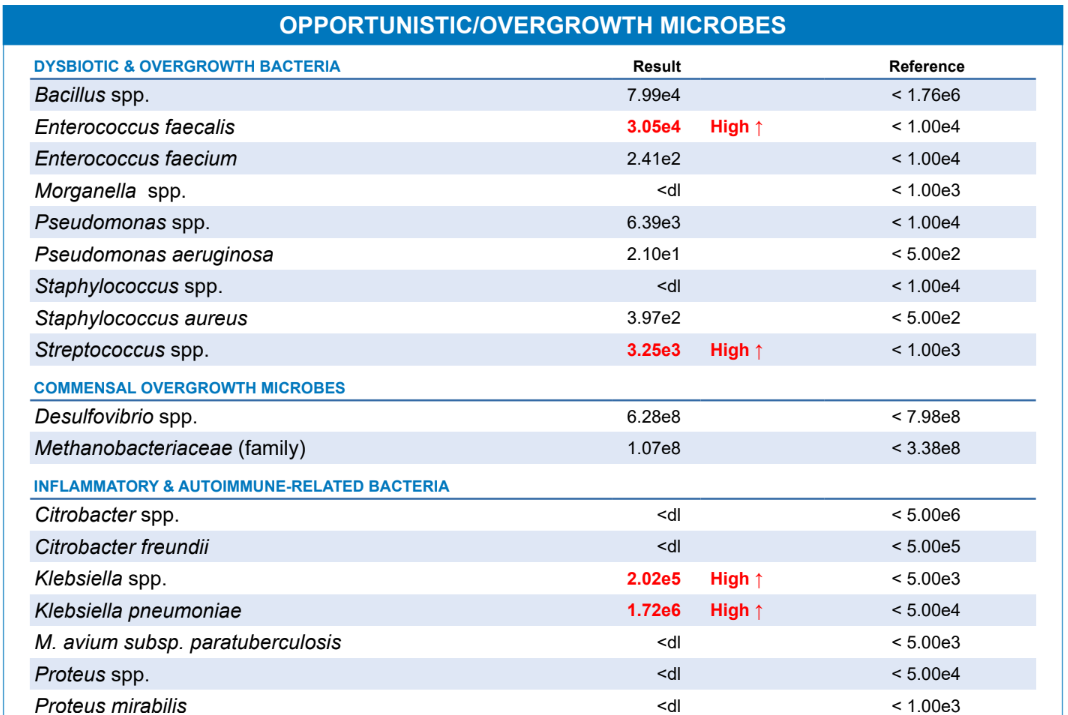
If you struggle with ongoing bloating, reflux, or unexplained nutrient deficiencies, reach out to us. There is a test called the GI map that can determine H. pylori levels and test for other harmful microbes in the gut. We can help you sort out this information and get you on the right path. See below for a sample of the GI map test: