HRV (heart rate variability) is my favorite objective measure to track. Especially as a physical therapist. We get the question often, ‘how much is too much’? HRV is the best way to answer that question.
Under normal circumstances, our heart rate varies. As you inhale, the heart speeds up slightly, and as you exhale, it slows down slightly. So there is a normal sinus rhythm to the heart rate. When we’re in more of a stressed state, the heart rate becomes less variable. Essentially, HRV gives us insight into how much time we are spending in a parasympathetic state vs. a sympathetic state. It’s a measure of our autonomic nervous system.
We should be in a parasympathetic state much more throughout the day. So if HRV is low, it means we are dealing with too much stress, or chronic low grade stress. This has downstream effects on virtually all parts of the body, so it’s less than ideal.
Reminder; the equation to adapt:
Stress + Recovery = Adaption
It could also be written:
Sympathetic + Parasympathetic = Adaptation
In other words, you provide the stimulus to recover, that’s where the magic happens. If we are spending too much time in a sympathetic state, or not enough time in a parasympathetic state, we get less adaptation.
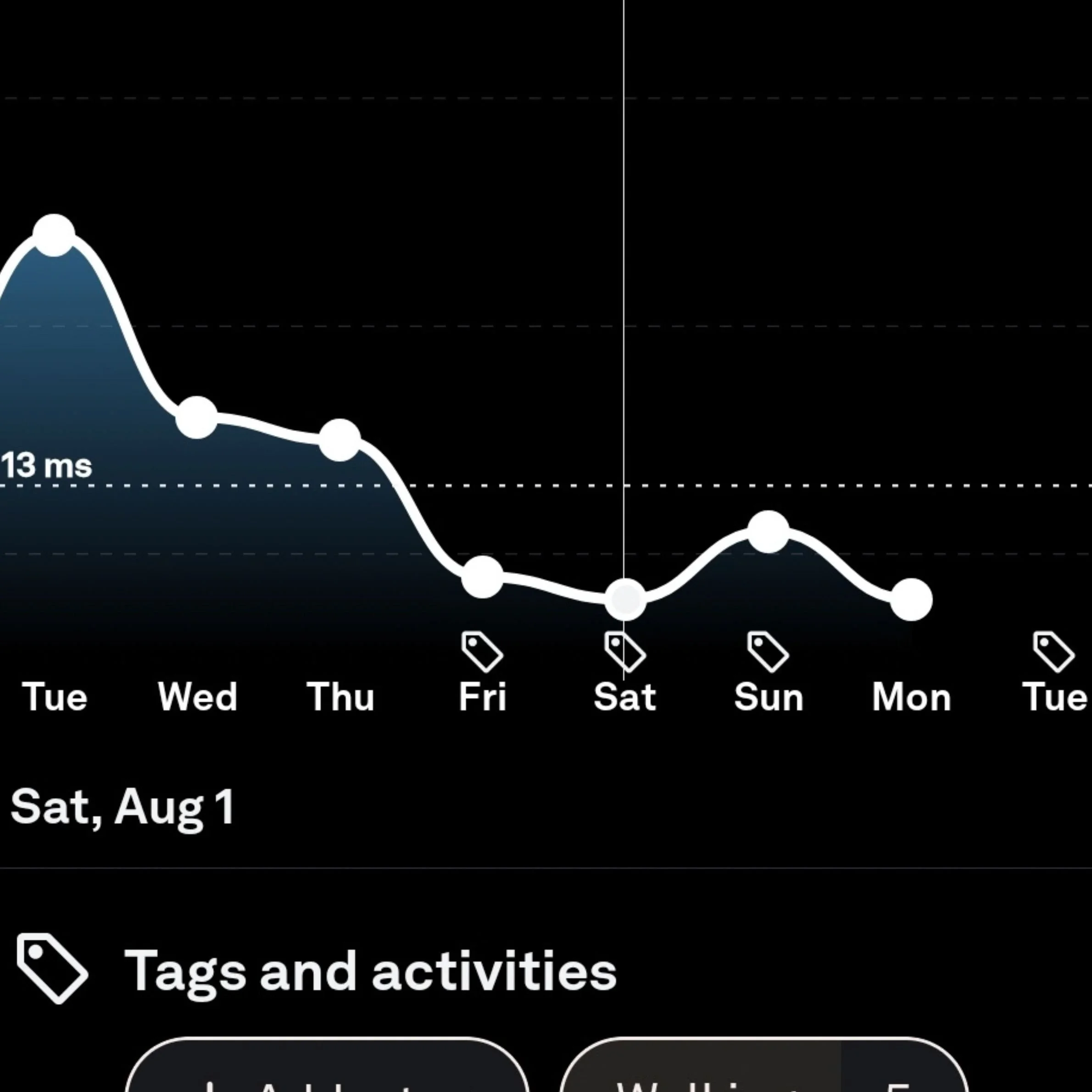
When it comes to looking at your HRV, the numbers themselves do not matter. There is a fair amount of variation from person to person. What you should care about is the baseline. In Oura Ring, that is the dotted line:
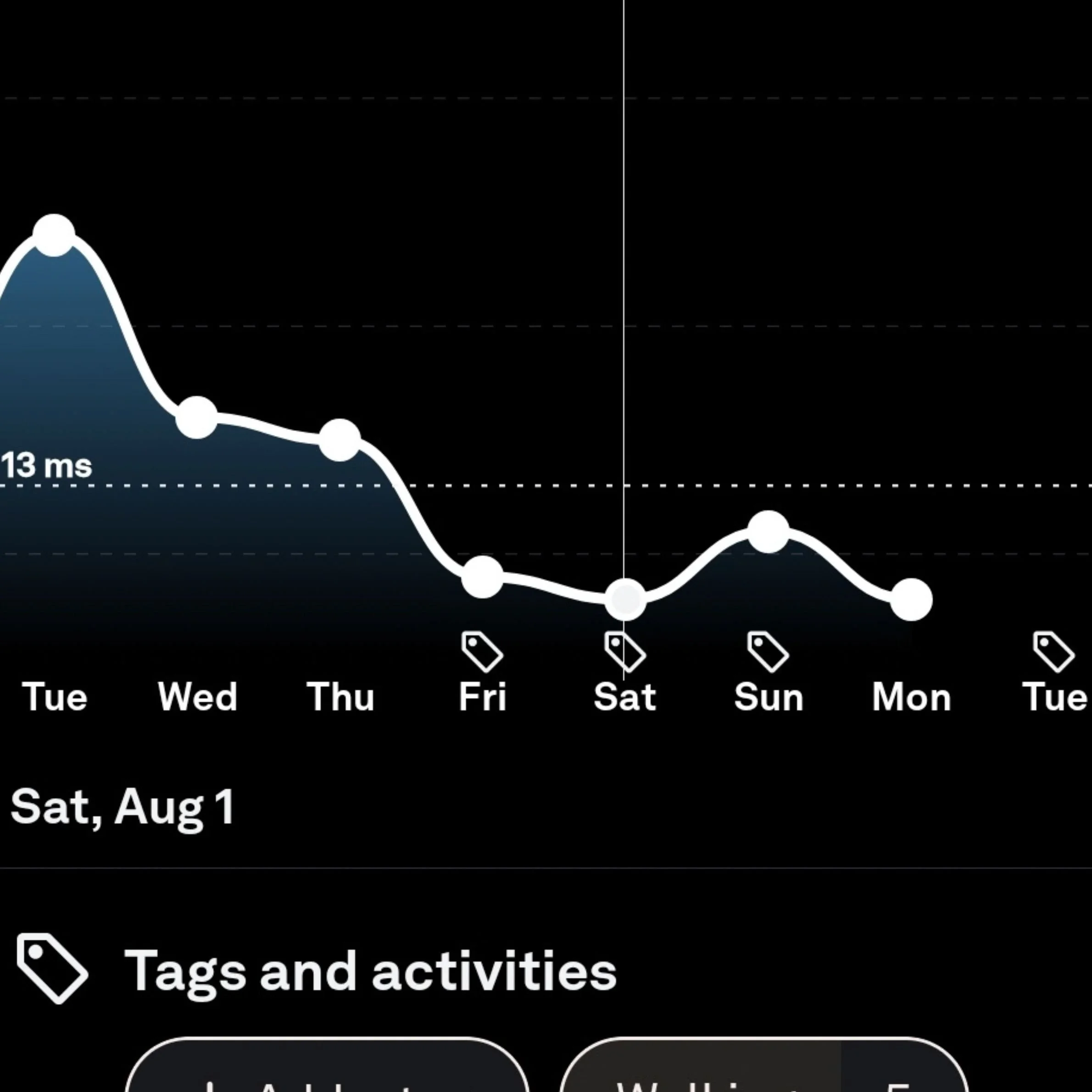
You should pay attention to a few things. Firstly as assessment, what activities send you below baseline? What activities send you above? How quickly do you return to baseline? There is usually about a 24 hour drag so what you do today will affect your recovery tomorrow.
Secondly, use this as a guide to determine what you will do today. HRV low? That’s a day to take it easy, find parasympathetic activities such as massage, foam rolling, easy cardio, rest, walking in nature; whatever you find relaxing. On a day where your HRV is high, that’s a day to get active. Maybe that’s going for that heavy lift in the gym. This is a day you can stack stressors.
It’s important to point out that there is Eustress and Distress. Eustress is similar to the idea of hormetic stress. Generally speaking, it's good stress. It’s sort of that “whatever doesn’t kill me makes me stronger”, such as exercise. A distress is “too much”. This is where injury is likely to occur. Let’s take sunlight as an example. It’s a type of stress. The right amount gives you a tan which is protective, that’s eustress. Too much and you get a sunburn, that’s distress.
However, just because it’s a good stress, it’s still a stressor. Stressors are stackable. Everyone has their own capacity to tolerate stress and when you keep adding more stressors into the bucket, you can create overflow and this is what will send your HRV low.
When you first start looking at HRV, it’s a good idea to tag all activities to determine what brings you up and down, and what returns you to baseline. Over time, you’ll find the activities that are best at bringing you back to baseline.
The end goal should be to build a bigger bucket, so you can handle more stress. That’s how you build resilience.