Pain in the Back of the Shoulder
I wanted to write a blog about a few conditions that are cited as “rare” online, but patterns I see fairly often. Pain in the back of the shoulder is often blamed on the rotator cuff or labral tears. However, a few conditions can be missed with these assumptions, particularly with gym-goers and overhead athletes. Two of these syndromes are called triangular interval syndrome and quadrilateral space syndrome. When these areas are stiff, they can compress the nerves such as the radial nerve (triangular interval) or the axillary nerve (quadrilateral space).
When a nerve is compressed, you will often experience numbness and tingling, and/or burning and radiating pain. The more the nerve is compressed, the further down your arm it will travel. This is called peripheralization. As the nerve is less compressed, the pain will recede towards the midline. This is called centralization. We want centralization, so for starters, avoid activities that peripheralize pain and encourage activities that centralize pain.
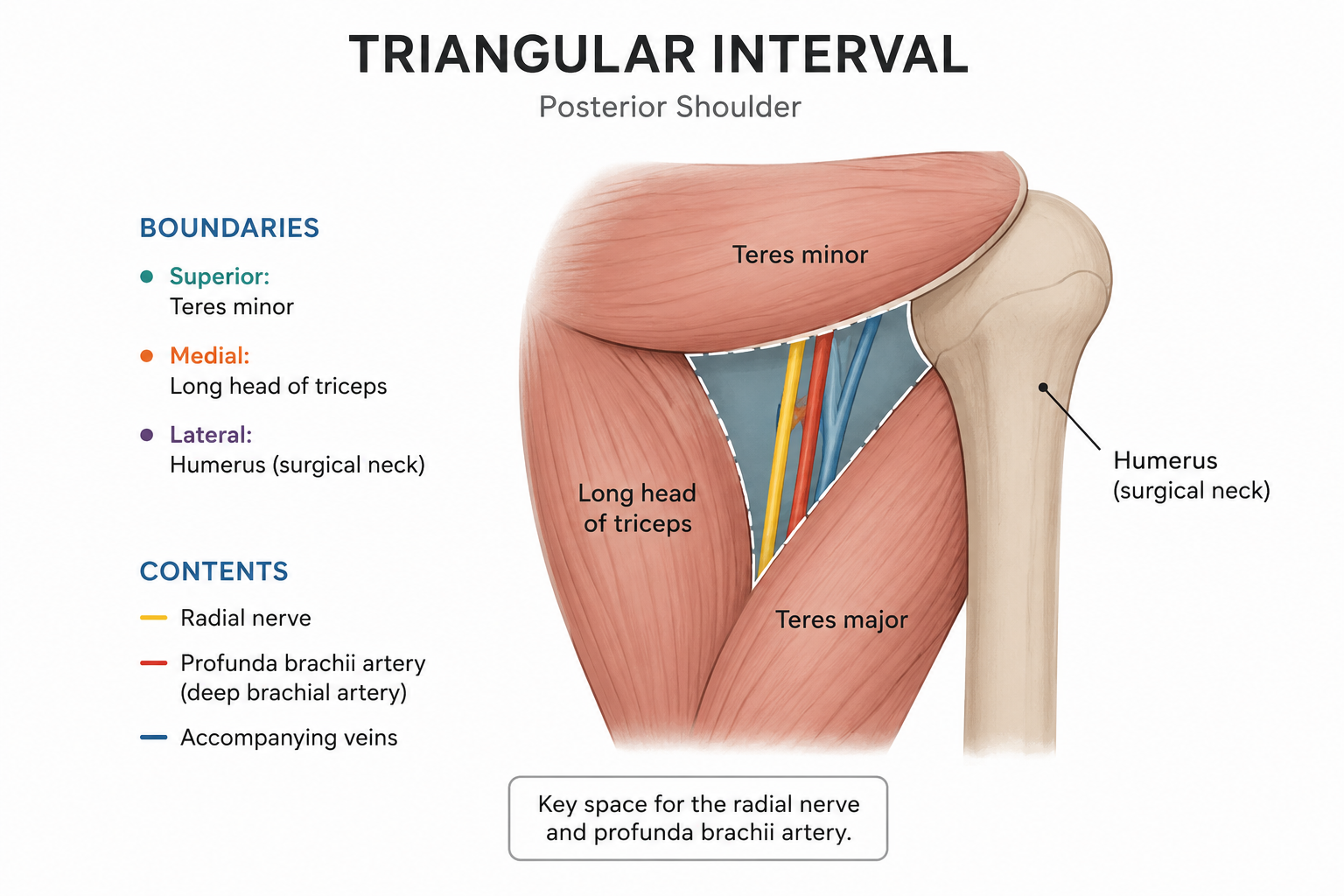
One of the most important areas for the radial nerve is called the triangular interval, located in the back of the armpit (posterior axilla).
This space is bordered by:
Teres major (superiorly)
Long head of the triceps (medially)
Humerus and lateral head of the triceps (laterally)
Just in front of this region lies the insertion of the latissimus dorsi, one of the largest muscles of the back.
When the latissimus dorsi, teres major, or triceps become tight, overactive, or develop trigger points, they can reduce the available space around the radial nerve or increase tension on the nerve during arm movement. Because of the attachments of these muscles, reaching overhead and external rotation usually reproduce the symptoms and will usually cause pain in the elbow.
How do you know the difference between elbow pain from golfer’s/tennis elbow versus triangular interval syndrome? Wrist motions will bother golfer’s or tennis elbow, whereas shoulder motions will bother triangular interval syndrome.
Quadrilateral Space Syndrome is similar. It occurs when the axillary nerve and the posterior circumflex humeral artery become compressed as they pass through a small anatomical opening in the back of the shoulder called the quadrilateral space.
This compression can irritate the nerve, reduce blood flow, or both.
The quadrilateral space is bordered by four structures:
Superior: Teres minor
Inferior: Teres major
Medial: Long head of the triceps
Lateral: Surgical neck of the humerus
Inside this small space run:
Axillary nerve
Posterior circumflex humeral artery
Like triangular interval syndrome, when these muscles become tight, enlarged, inflamed, or scarred, they can compress these important structures. Patients often describe:
Deep aching pain in the back or outside of the shoulder
Pain when reaching overhead
Pain during throwing or lifting
Night pain when lying on the affected shoulder
Numbness over the outside of the shoulder
Weakness with lifting the arm
Fatigue during repetitive overhead activity
Soft tissue work like massage, foam rolling, or theraguns can help. Mobilizing the tissues in these spaces can help as well. Here are a few that I’d suggest:
For this one, just avoid locations that send pain into the elbow. That’s a sign you are on the nerve.